

Thyroid Cancer
Understanding Thyroid Cancer
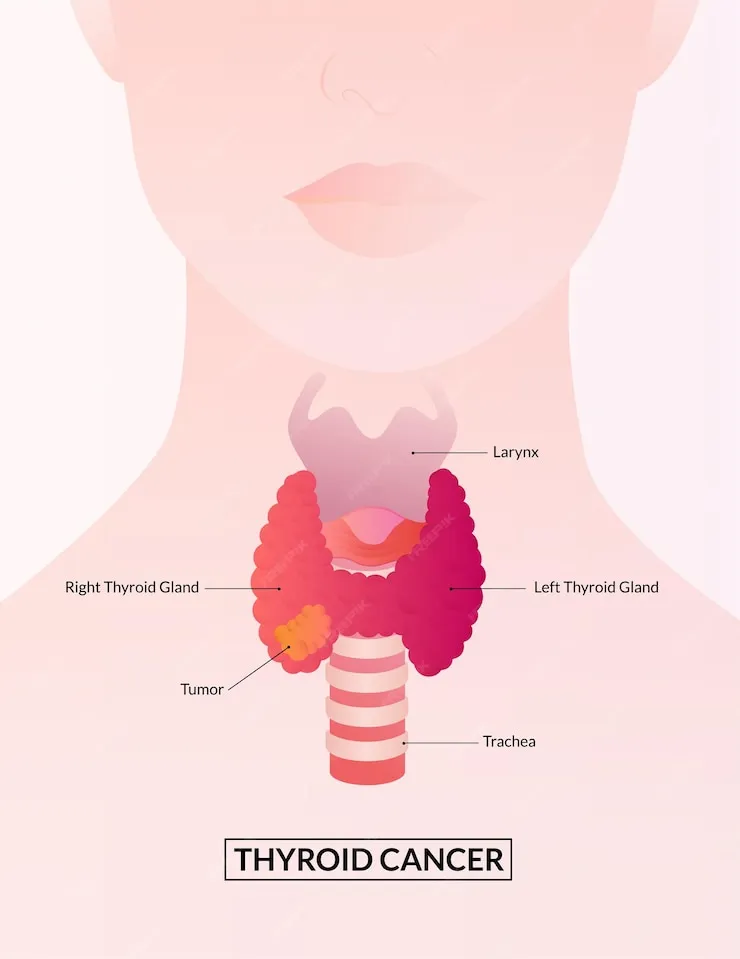
Thyroid cancer is a type of malignancy that originates in the cells of the thyroid gland, a small butterfly-shaped gland located in the neck. It's a relatively rare form of cancer but can occur at any age. Understanding this condition involves recognizing its types, causes, and treatment options.
Types of Thyroid Cancer
Papillary Thyroid Cancer: This is the most common type, accounting for about 80% of thyroid cancer cases. It tends to grow slowly and usually remains confined to the thyroid gland initially.
Follicular Thyroid Cancer: This type accounts for approximately 10-15% of thyroid cancer cases. It often spreads to nearby lymph nodes and can invade blood vessels.
Medullary Thyroid Cancer: This type is less common, arising in the C cells of the thyroid that produce calcitonin. It may also run in families and can spread to lymph nodes and distant organs.
Anaplastic Thyroid Cancer: This is the most aggressive and least common form of thyroid cancer. It rapidly grows and spreads to nearby structures in the neck.
Causes and Risk Factors
Thyroid cancer often occurs due to genetic mutations in thyroid cells. While the exact cause isn't always clear, some risk factors may increase the likelihood of developing this cancer, including radiation exposure, certain inherited genetic syndromes, and a family history of thyroid cancer.
Treatment Options
Treatment for thyroid cancer depends on the type, stage, and individual patient factors. Common approaches include:
- Surgery: The primary treatment involves surgical removal of part or all of the thyroid gland (thyroidectomy). Lymph nodes in the neck might also be removed.
- Radioactive Iodine Therapy: This treatment, often used after surgery, involves taking radioactive iodine orally. The iodine is absorbed by any remaining thyroid tissue to destroy cancerous cells.
- Hormone Replacement Therapy: After surgery, patients might need to take synthetic thyroid hormone to replace the hormones no longer produced by the thyroid.
- External Beam Radiation Therapy: In cases where cancer spreads or returns after initial treatments, external radiation therapy may be utilized.
- Targeted Drug Therapy: For advanced or recurrent thyroid cancer, targeted drug therapies may be employed to inhibit specific cancerous processes.
Treatment plans are personalized based on the cancer's stage, the patient's overall health, and other factors, often involving a multidisciplinary approach with endocrinologists, surgeons, oncologists, and other specialists. Regular follow-ups are crucial to monitor progress and manage any potential recurrence.
Dr. Aun Jamal?
Testimonials from Our Patients
Posted on Google
 Arslan Zubair
 I recently had the privilege of being under the care of Dr. Aun and I am incredibly impressed with the level of expertise and care provided.Posted on Google
 mamoona nayabI wanted to express my heartfelt gratitude for your exceptional care and expertise during my complex sarcoma cancer surgery. Your professionalism, compassion, and skill have made a significant impact on my journey to recovery. Thank you for your dedication to providing outstanding medical care. May Allah bless you even more. Highly recommendedPosted on Google
 Inzamam IzrarI recently had the privilege of being under the care of Dr. Aun jamal, and I cannot speak highly enough of the exceptional care and expertise I experienced throughout my cancer treatment journey. Dr. Aun jamal is not only a highly skilled and knowledgeable cancer surgeon but also a compassionate and empathetic healthcare professional. From the initial consultation to the post-operative follow-ups, Dr. Aun jamal demonstrated a genuine concern for my well-being, taking the time to explain every aspect of the treatment plan and addressing any concerns I had. The surgical procedure was conducted with precision, and the recovery process was smoother than I could have anticipated. Dr. Aun jamal and their team ensured that I felt supported and informed at every stage, fostering a sense of trust that is crucial in such challenging times. What sets Dr. Aun jamal apart is not only their surgical expertise but also their ability to communicate complex medical information in an understandable and compassionate manner. This greatly eased the anxiety associated with my diagnosis, making the entire process more manageable. I am grateful for the positive outcome of my treatment, and I attribute much of this success to Dr. Aun jamal's dedication and proficiency. I highly recommend Dr. Aun jamal to anyone seeking a skilled and caring cancer surgeon who goes above and beyond for their patients.Posted on Google
 Arslan MehmoodI had an amazing experience with the doctor Outstanding Experience Highly recommendedPosted on Google
 Daood AyubI am a surgeon myself but i always refer advanced and complicated ovarian cancer and sarcoma to Dr Aun and Alhamdulillah all of my refered patients are satisfied with him. Very polite and kind human being. Highly recommendedPosted on Google
 Hinaa Sarfraz
 Dr. Aun Jamal is a talented surgeon.He's definitely someone you can trust when it comes to surgical procedures.
Request
Appointment Today
Call Us
03074443322
24/7 Support
Book Now
Location
Evercare Hospital Lahore